It’s imperative for you to understand the transformative impact of effective employee onboarding on your organization. This guide will provide you with best practices and strategies that not only enhance your new hires’ integration but also contribute significantly to your business success. By implementing the right onboarding process, you can foster increased engagement, retention, and a vibrant company culture that aligns with your goals. Dive in to discover how to make the most of your onboarding efforts and build a strong foundation for your team.
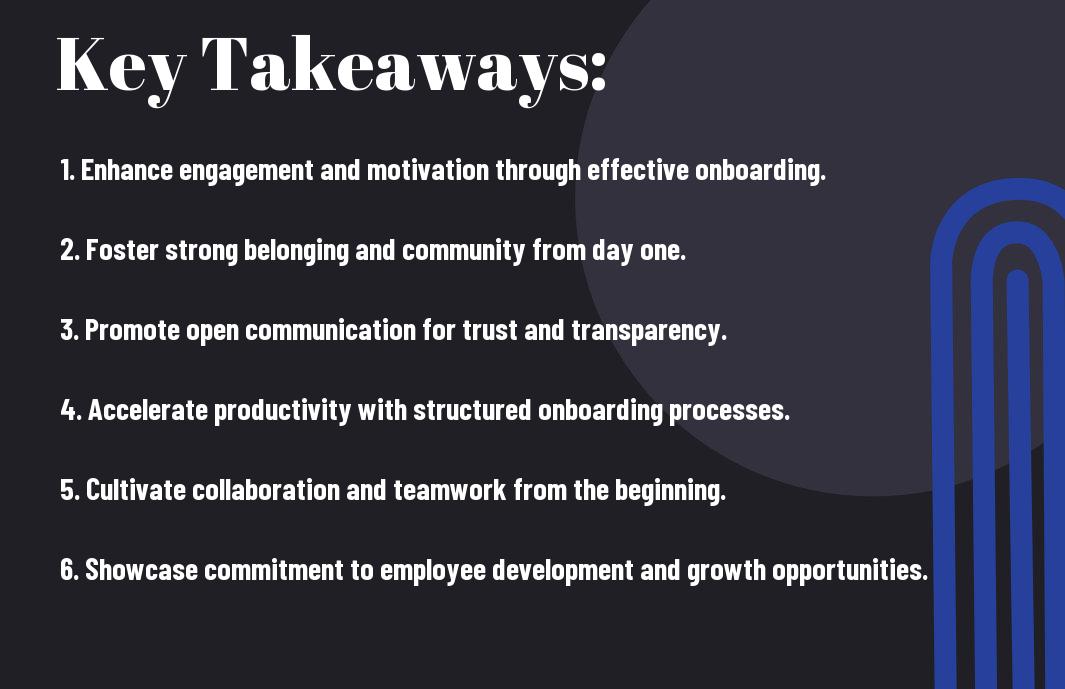
Key Takeaways:
- Enhanced Engagement: A structured onboarding process leads to higher employee engagement and motivation, fostering a desire for personal and organizational success.
- Reduced Anxiety: Providing clear guidelines and expectations can alleviate stress, allowing new hires to acclimate to their roles more comfortably.
- Accelerated Productivity: Onboarding equips employees with the necessary tools and knowledge, significantly shortening the learning curve and boosting productivity early on.
- Strengthened Company Culture: Integrating new hires into team-building activities promotes a sense of belonging and reinforces core company values from day one.
- Improved Retention Rates: Positive onboarding experiences lead to greater job satisfaction and loyalty, ultimately reducing turnover and enhancing company stability.
Importance of Employee Onboarding
Your onboarding experience significantly impacts your initial impressions of the company and sets the tone for your future within the organization. Effective onboarding goes beyond just filling out paperwork; it is designed to integrate you into the company culture, enhance your understanding of your role, and build relationships with your colleagues. This structured process is necessary in fostering an environment where you feel welcomed, motivated, and ready to contribute. With this foundation, you are more likely to feel engaged and satisfied with your work, leading to enhanced job performance.
Benefits for New Employees
One of the most significant benefits of effective onboarding is that it helps you reduce anxiety as you transition into your new role. By providing a clear outline of expectations and support resources, the onboarding process equips you to navigate the complexities of your new environment with confidence. This not only enhances your sense of preparedness but also increases your motivation to succeed in your role from day one.
Additionally, onboarding fosters a sense of belonging within the organization, which is vital for your overall job satisfaction. Engaging with colleagues through team-building activities and introductory meetings helps you to develop early connections, making you feel valued and integrated into the workplace culture. This sense of community can significantly influence your decision to stay with the company long-term, ultimately contributing to higher levels of retention.
Impact on Business Success
To understand the broader impact of onboarding, it’s necessary to recognize that a well-executed program not only benefits you but also translates into significant gains for the company. Effective onboarding leads to reduced turnover rates and shorter learning curves, which in turn results in higher productivity levels. Companies that prioritize onboarding experience increased employee satisfaction, which enhances teamwork and collaboration across departments.
Business leaders who invest in comprehensive onboarding processes foster a culture that emphasizes support and engagement. When you feel welcomed and prepared, you are more likely to contribute positively to your team and the organization as a whole. As a result, the company enjoys better performance and a competitive edge in its industry—highlighting that a commitment to onboarding can yield remarkable returns on investment in both human capital and business outcomes.
Best Practices in Employee Onboarding
Now that you understand the significance of employee onboarding, it’s time to probe into best practices that can enhance the experience for new hires. A well-structured onboarding program can make a significant difference in helping new employees acclimate to their roles within an organization. It’s necessary to create a clear, comprehensive onboarding plan that encompasses everything from administrative tasks to cultural immersion. This preparation enables you to provide new hires with the right tools and information needed to thrive in their new environment, ultimately reducing their stress and enhancing engagement levels significantly. Statistics show that organizations with a structured onboarding process see 50% higher new hire retention rates—an investment that pays off.
Structured Onboarding Programs
Onboarding programs that are structured help build a strong foundation for new employees. This approach lays out a clear roadmap of what to expect during the initial weeks of their employment, allowing them to navigate through their responsibilities and the company culture with confidence. By including sessions that address the company’s mission, values, and operational procedures, you ensure that new hires understand their place within the larger vision of the organization. Additionally, providing actionable insights and clear timelines fosters a sense of stability and support, making it easier for new team members to transition into their roles effectively.
Effective Communication Strategies
Across the onboarding process, effective communication plays a pivotal role in ensuring that new employees feel welcomed and informed. Open lines of communication allow you to address any questions or concerns that may arise, fostering a culture of trust from the very beginning. Regular check-ins with managers and team members facilitate a continuous feedback loop, which is vital for understanding the expectations and dynamics of the workplace. Utilizing a mix of verbal, written, and visual communication methods caters to different learning styles, enhancing information retention for new hires.
With a focus on effective communication, you can ensure that your onboarding process not only conveys necessary information but also reinforces the company’s commitment to a supportive working environment. Establishing clear communication channels, such as dedicated onboarding platforms or regular Q&A sessions with department leaders, allows new employees to seek clarification as needed. This proactive approach helps diminish any uncertainties, leading to quicker acclimation and a more engaged workforce.
Onboarding Strategies for Success
Many organizations are realizing the significance of effective onboarding strategies in laying the groundwork for long-term employee success. By designing a thoughtful onboarding experience, you can create an environment where new hires feel welcomed and well-prepared from day one. This involves aligning the onboarding process with the company’s core values and providing comprehensive training that covers both job-specific skills and broader organizational culture. Facilitating strong connections with colleagues and management through structured activities can help foster a sense of belonging and community, which is important for enhancing employee satisfaction and retention.
Engaging Onboarding Activities
For your onboarding process to be truly effective, it should include engaging activities that go beyond standard paperwork and orientation sessions. Incorporating elements like team-building exercises, mentorship programs, and social gatherings creates opportunities for new employees to bond with their colleagues and grasp the company culture firsthand. These activities instill a sense of connection and motivate new hires to actively participate in their roles from the outset. Furthermore, fostering relationships through informal settings, such as lunch meet-ups or coffee breaks, enhances collaboration and teamwork, paving the way for a positive work environment.
Utilizing Technology in Onboarding
Above all, integrating technology into your onboarding process can significantly enhance the experience for new hires. Online platforms and training modules allow you to streamline onboarding tasks, making it easier for you to access resources and information at your convenience. Utilizing tools such as e-learning programs, virtual welcome kits, and collaborative platforms ensures that you have everything you need within reach, facilitating a smoother transition into your role. Moreover, technology enables real-time feedback mechanisms that can help you stay engaged and reflect on your progress throughout the onboarding journey.
But leveraging technology also allows you to track the onboarding process more effectively. Data analytics can offer insights into employee engagement levels and identify areas for improvement, ensuring that you continually refine your onboarding strategies. By combining innovative technological tools with personalized onboarding experiences, you set the stage for a workforce that is not only well-informed but also capable of contributing meaningfully to your company’s success.

Measuring the Effectiveness of Onboarding
Unlike many aspects of your business that may be subjective, onboarding can be measured with concrete metrics that demonstrate its impact on employee performance and retention. Assessing the effectiveness of your onboarding process is vital to ensure that new hires acclimate successfully and feel integrated into your company culture. By tracking key indicators such as employee engagement scores, turnover rates, and time-to-productivity, you can gain valuable insights into your onboarding efforts. For more guidance, refer to Employee Onboarding: Best Practices and Tips for Success.
Key Performance Indicators (KPIs)
KPIs are instrumental in evaluating the success of your onboarding program. You might consider tracking metrics such as the retention rate of new employees after their first year, which directly correlates with the quality of the onboarding experience. Additionally, assessing the time it takes for new hires to reach productivity milestones can reveal how effectively your program equips them with the tools and knowledge necessary to succeed in their roles. These data points provide a clear picture of your onboarding process’s strengths and weaknesses.
Feedback Mechanisms
At the heart of a successful onboarding program is a system for gathering feedback from new hires. Engaging with employees about their onboarding experience can uncover areas needing improvement and highlight what aspects they found beneficial. Through surveys, one-on-one meetings, and informal check-ins, you can assess their comfort level, satisfaction, and overall thoughts regarding the onboarding process.
This feedback is invaluable because it allows you to make continuous adjustments to your onboarding program. By creating a cycle of listening to employee experiences and implementing changes, you establish a culture of trust and openness. This proactive approach results in a more effective onboarding program, leading to improved employee satisfaction, higher engagement levels, and ultimately, better retention rates.
Common Onboarding Challenges
Despite your best efforts to create a seamless onboarding experience, several challenges may arise during the process. New hires might encounter resistance to change, which can hinder their integration into the company culture and negatively impact their initial engagement. Additionally, the sheer volume of information presented during onboarding can be overwhelming. It’s imperative to recognize these obstacles and address them proactively to foster a supportive environment for new employees.
Addressing Resistance to Change
About one of the significant hurdles in onboarding is the resistance to change that many new employees may experience. Transitioning to a new workplace often involves adapting to different ways of doing things, which can be daunting. You can mitigate this resistance by actively communicating the benefits of the changes and helping new hires align their personal goals with the company’s objectives. Engaging them in discussions about the company’s values and illustrating how these changes contribute to success can foster a sense of ownership and commitment.
Overcoming Information Overload
Between processing new job responsibilities, company policies, and introductions to team members, new hires often feel overwhelmed by the flood of information presented during onboarding. To combat this, you should focus on streamlining the onboarding process by prioritizing the most critical elements first, breaking down information into manageable sections, and providing resources for future reference. This approach will ease new employees into their roles, making it simpler for them to retain and apply the knowledge they acquire.
Overload can lead to confusion and disengagement, especially if new hires feel they have to absorb a daunting amount of information at once. By implementing a structured onboarding program that gradually introduces organization elements, you can create a more digestible experience. Regular check-ins and follow-up sessions can help reinforce the information and allow new employees to ask questions, ensuring they feel supported and confident as they navigate their new roles.

Enhancing Company Culture Through Onboarding
Not only does effective onboarding set the foundation for a successful employee experience, but it also has the power to significantly enhance your company culture. A well-structured onboarding process can help in creating an environment that reflects the values and mission of your organization, ensuring that new hires feel connected to the broader goals of the company. By effectively integrating employees into your culture from day one, you can foster greater engagement, reduce turnover, and cultivate a sense of belonging among your workforce.
Aligning with Company Values
The alignment of onboarding processes with your company’s core values is necessary for reinforcing what your organization stands for. When new employees are introduced to the values and mission of the company through tailored activities and training, they gain clarity on the expectations for their roles and how their work contributes to the organization’s success. This initial immersion not only helps to align individual and organizational goals but also cultivates a shared sense of purpose among team members, leading to a more cohesive work environment.
Promoting Inclusivity and Diversity
Before new hires step into their roles, it is critical to foster inclusivity and diversity through your onboarding practices. By actively promoting a diverse environment that values different perspectives, you help create a welcoming atmosphere where all employees can thrive. This can be achieved by incorporating training sessions that address unconscious bias and encouraging open dialogues about diversity within the workplace. Such initiatives will not only enhance employees’ understanding of inclusive practices but will also contribute to a vibrant company culture that celebrates different backgrounds and experiences.
Another approach to promote inclusivity and diversity during onboarding is to implement mentorship programs that pair new hires with experienced colleagues from diverse backgrounds. This not only helps newcomers navigate their roles but also promotes cross-cultural understanding and collaboration. Creating a diverse and inclusive onboarding experience reinforces a culture where every voice is heard and valued, ultimately leading to increased employee satisfaction and loyalty to the organization.
Essential Guide to Employee Onboarding: Best Practices, Strategies, and Benefits for Business Success
The onboarding process serves as a vital step in your journey with a new organization, influencing not just your immediate experience but also the long-term trajectory of your career. By understanding and embracing effective onboarding practices, you are setting yourself up for success. You’ll find that a well-executed onboarding experience enhances your engagement and motivation, reduces anxiety, and fosters a strong sense of belonging within the corporate culture.
Your active participation in the onboarding process is just as important as the structure provided by the company. Approach your first days with curiosity and enthusiasm, asking questions and seeking connections with colleagues. This proactive attitude not only helps you integrate smoothly but also reflects your commitment to your personal and professional development. Ultimately, embracing comprehensive onboarding practices contributes not only to your growth but also to the overall success and culture of the business you join.
FAQ: Essential Guide to Employee Onboarding
Q: What are the key components of an effective employee onboarding program?
A: An effective employee onboarding program should include a structured orientation process, comprehensive training tailored to the role, introductions to key team members, and ongoing support. Additionally, it should communicate company values, mission, and expectations, allowing new employees to integrate smoothly into the organization. Providing resources for questions and feedback is also important for creating a supportive environment.
Q: How does onboarding impact employee retention rates?
A: A well-executed onboarding process significantly boosts employee retention rates. When new hires feel welcomed, equipped to perform their roles, and connected to the company culture from day one, they are more likely to remain with the organization long-term. Positive onboarding experiences can lead to higher job satisfaction, reduced turnover, and increased loyalty to the company.
Q: What strategies can companies implement to enhance their onboarding experience?
A: Companies can enhance their onboarding experience by personalizing the process for each new employee. This can involve assigning a mentor or buddy for guidance, incorporating team-building activities, using technology for scheduling and communication, and regularly soliciting feedback from new hires to implement continuous improvements. Additionally, creating an engaging and interactive onboarding program can motivate and inspire new employees.
Q: How long should the onboarding process last?
A: The duration of an onboarding process can vary based on the company and the complexity of the job. Generally, it should last at least a few weeks and can extend to several months. A successful onboarding experience is one that gradually integrates new hires into their roles and the company culture, allowing time for training, relationship building, and familiarization with company policies and procedures.
Q: What role does company culture play in the onboarding process?
A: Company culture plays a significant role in onboarding as it shapes the way new employees perceive their environment and expectations. An onboarding program that reflects and reinforces the company’s values and culture helps new hires understand their place within the organization and fosters a sense of belonging. By showcasing the company culture through various activities and interactions, organizations can create a positive first impression that influences employee engagement and satisfaction.