There’s a significant chance that the algorithms used by LinkedIn are influencing your job discovery process more than you realize. Understanding how these cryptic algorithms function can help you optimize your profile and interactions on the platform, ultimately enhancing your chances of landing your desired position. By leveraging these insights, you can navigate LinkedIn’s complex ecosystem more effectively, tailoring your approach to ensure that your job search components align with the platform’s unique algorithmic preferences. Consequently, you’ll gain a competitive edge in your quest for new career opportunities.

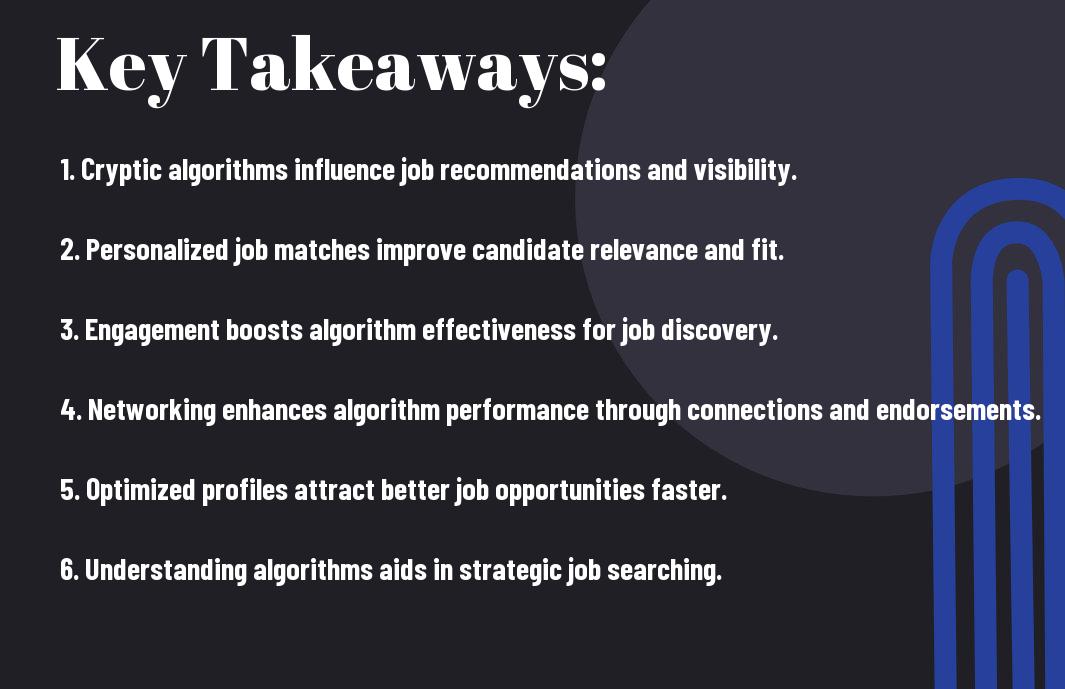
Key Takeaways:
- Algorithm Influence: Cryptic algorithms determine job postings visibility based on your profile, connections, and activity.
- Tailored Recommendations: Personalized job suggestions arise from your interactions and engagement on the platform, affecting potential discovery.
- Profile Optimization: A well-optimized profile increases chances of showing up in employer searches and job alerts.
- Networking Effect: Engaging with connections and industry groups enhances algorithm efficiency, leading to more relevant job matches.
- Active Participation: Regularly sharing content and applying for jobs can signal to algorithms that you’re an active candidate, increasing visibility.
Understanding Cryptic Algorithms on LinkedIn
While navigating the intricacies of LinkedIn, you may find yourself encountering cryptic algorithms that can significantly influence your job search experience. These algorithms sift through vast amounts of user data to personalize content, suggest connections, and showcase job opportunities tailored to your profile. By understanding how these algorithms function, you can better position yourself to leverage their insights for a more effective job discovery process. This knowledge empowers you to optimize your LinkedIn presence, increasing the probability that relevant job postings land in front of you.
What Are Cryptic Algorithms?
After examining the dynamics of LinkedIn, it’s important to recognize that cryptic algorithms are importantly the coded systems powering the site’s functionality. These algorithms analyze factors such as your profile information, activity history, and network connections to determine what content is most relevant to you. They make real-time decisions, influencing the visibility of job postings, the profiles you see, and even the recommendations for potential connections. By decoding their mysterious operations, you can align your own actions on LinkedIn to yield more favorable outcomes in your job search.
The Role of Algorithms in Job Discovery
Cryptic algorithms play a pivotal role in your job discovery journey on LinkedIn. They curate a personalized experience by recommending job postings that match your skills, experiences, and preferences, often before you even realize these opportunities exist. By tracking your interactions—such as searches, clicks, and applications—these algorithms continuously refine their understanding of what you are looking for in your next role.
Cryptic algorithms are not just filtering information; they are actively shaping your job search landscape. As you engage with different job postings and connect with fellow professionals, these algorithms learn and adapt, enhancing their predictions about what roles might suit you best. This tailored approach increases your chances of finding a job that aligns with your aspirations and skills, streamlining your path to securing your desired position. To make the most of this feature, strategically updating your profile and engaging authentically with potential employers can augment the algorithm’s effectiveness in guiding your job search.
The Impact of Cryptic Algorithms on Job Seekers
Visibility and Reach
Any job seeker will tell you that visibility is a critical factor in the job discovery process. Across various platforms, your profile’s exposure is often governed by complex algorithms that prioritize certain factors over others, determining which job opportunities land in front of you. On LinkedIn, this can mean that if your profile is not optimized according to the latest algorithmic trends, potential employers may overlook your experience and skills. It becomes imperative to understand how these algorithms work to maximize your reach and connect with the right opportunities.
Profile Optimization Strategies
Along with understanding the impact of algorithms, you should also focus on specific strategies to enhance your profile’s performance. Utilizing the right keywords related to your industry, ensuring your profile is complete, and engaging regularly with content can significantly influence your visibility to recruiters. Additionally, actively participating in LinkedIn groups related to your field can expose you to more job opportunities that you might otherwise miss. By tailoring your profile to meet these algorithmic preferences, you position yourself to attract the attention of hiring managers more effectively.
And in addition to these strategies, it’s imperative to keep your profile dynamic and updated. This means regularly posting relevant articles, sharing industry insights, or commenting on trends that relate to your field. Your engagement signals to LinkedIn’s algorithm that you are active and invested in your career, thus boosting your profile’s ranking. This proactive approach not only helps you stay visible to recruiters but also establishes your authority within your niche, making you an attractive candidate for potential job offers.
Decoding the Algorithm: Tips for Job Seekers
For job seekers navigating the labyrinth of LinkedIn’s job discovery process, understanding the underlying algorithms can significantly bolster your chances of landing your desired position. By tailoring your profile and activity to align with what the algorithm values, you enhance your visibility to recruiters and potential employers. Here are some strategies to help you maximize your LinkedIn experience:
- Optimize your profile with relevant keywords.
- Engage with content related to your field.
- Regularly update your skills and endorsements.
- Connect with professionals in your industry.
- Utilize LinkedIn’s job alert features.
Any effort you make to adapt to the algorithm will increase your visibility in a competitive job landscape.
Effective Use of Keywords
Below, we examine into the importance of incorporating the right keywords into your LinkedIn profile. Choosing specific words and phrases that align with job descriptions in your industry can elevate your profile in searches conducted by employers. You need to perform research on current job listings to identify which skills and terms are commonly featured, ensuring that your profile resonates with recruiters looking for candidates like you.
Including these keywords naturally in your summary, experience, and skills sections will make your profile not only more searchable but also appealing to recruiters reviewing your qualifications. Additionally, consider using industry-specific jargon and software names that reflect your expertise, showcasing that you are up-to-date with current trends and demands.
Networking Techniques to Enhance Visibility
Along with optimizing your profile, actively networking is another key aspect of increasing your visibility on LinkedIn. Reaching out to former colleagues, classmates, and industry professionals can significantly expand your connections and open new avenues for job opportunities. Be proactive in joining LinkedIn groups relevant to your field, participating in discussions, and sharing valuable content to strengthen relationships and establish yourself as an expert in your area.
In fact, the more you engage with others in your industry, the more likely you are to receive referrals or insider recommendations for job openings. Engaging with posts, commenting insights, and sharing your unique perspective demonstrates your commitment and expertise while increasing your likelihood of being noticed by recruiters. Establishing a rich network will not only elevate your profile but also enhance your professional reputation in your chosen field.
Ethical Considerations of Algorithmic Job Discovery
All users must navigate the complex landscape of algorithmic job discovery with an understanding of the ethical implications that come with it. The algorithms employed by platforms like LinkedIn can significantly shape your job search experience, affecting the opportunities presented to you based on various factors. This raises pertinent questions about fairness and transparency, especially when the mechanisms by which these algorithms operate remain largely unknown. For a deeper probe how these algorithms function, you may want to explore How Does The LinkedIn Algorithm Work?.
Fairness and Transparency
The effectiveness of job discovery algorithms heavily relies on their adherence to principles of fairness and transparency. If the algorithms disproportionately favor certain demographics or job profiles, it can limit your access to suitable job opportunities. This not only impacts your career trajectory but also raises broader societal concerns about equitable access to jobs in the digital age. Transparency in how these algorithms rank and recommend job listings is crucial for you to understand the dynamics at play in your job search.
The Role of Bias in Algorithms
Beside the challenges of fairness and transparency, biases inherent in algorithms can further complicate your job discovery process. These biases may stem from the data used to train the algorithms—if historical hiring patterns show favoritism toward specific groups, this can be mirrored in the recommendations you receive. You may find that job recommendations are shaped by factors unrelated to your skills or qualifications, thereby affecting your confidence and options in seeking employment.
Discovery of bias in these systems is vital for improving your job search experience. The presence of biased algorithms can lead to missed opportunities and a lack of representation in the job market. It is crucial for you to stay informed and proactive, seeking out diverse job opportunities and advocating for algorithmic reforms that promote equity. Understanding and addressing these biases can empower you to make informed decisions and better navigate the complexities of job discovery on platforms like LinkedIn.
Future Trends in LinkedIn Algorithms
Your understanding of how LinkedIn algorithms evolve can significantly influence your job search strategy. As the platform continues to refine its algorithms, you will witness a shift in job discovery dynamics. LinkedIn is investing heavily in AI and machine learning technologies to better match users with job opportunities that align with their skills, interests, and career aspirations. These advancements mean that your profile optimization, engagement with relevant content, and network-building activities will become more pivotal in determining your visibility to potential employers.
Evolving Job Search Dynamics
Evolving job search dynamics on LinkedIn indicate a trend towards personalized experiences. As algorithms evolve, you’ll likely find that job recommendations become increasingly tailored to your existing connections, previous interactions, and skills listed in your profile. This means being more discerning about how you present your professional self and the types of engagement you pursue to ensure that you appear on the right radar of hiring managers and recruiters.
Innovations in Recruitment Technology
Before delving into your job search, it’s vital to understand how innovations in recruitment technology can change the game for you. LinkedIn is integrating advanced tools that utilize data analytics and predictive modeling to streamline the hiring process. As such, employers will have access to a more refined candidate pool, and you must adapt to leverage these technologies to your advantage—focusing on enhancing your profile with the right keywords and engaging with your network meaningfully.
Hence, embracing these innovations means staying proactive in your job search efforts. With features like AI-driven candidate scoring systems and automated job alerts tailored to your profile, you can improve your chances of being discovered by recruiters. Regularly updating your skills, gathering endorsements, and leveraging LinkedIn Learning to acquire new competencies not only enhances your profile but prepares you for a marketplace increasingly driven by technology and data. By aligning your actions with these trends, you position yourself as a preferred candidate in a competitive job landscape.
Summing up
As a reminder, understanding cryptic algorithms on LinkedIn can significantly influence your job discovery process. These algorithms determine how your profile is presented to recruiters and potential employers, ultimately shaping your visibility in the job market. By optimizing your LinkedIn profile with relevant keywords, engaging with content that aligns with your career goals, and actively networking, you can enhance your chances of being discovered by the right opportunities. Your ability to navigate and leverage these algorithms effectively can lead to meaningful connections and job prospects.
Moreover, staying informed about adjustments in LinkedIn’s algorithm can give you a competitive edge. The platform is continually evolving, and knowing how to adapt your online presence will keep you relevant. By focusing on building a strong professional brand, showcasing your skills, and interacting with the community, you can ensure that you remain at the forefront of recruiters’ searches. Ultimately, being proactive and strategic in your approach will empower you to harness LinkedIn’s algorithms for your career advancement.
FAQ
Q: What are cryptic algorithms on LinkedIn?
A: Cryptic algorithms on LinkedIn refer to the complex sets of rules and systems that the platform uses to analyze user data and behavior. These algorithms determine how job postings, profile suggestions, and connection recommendations are filtered and displayed. They take into account various factors such as user interactions, profile completeness, and networking habits to optimize job discovery and provide personalized experiences.
Q: How do cryptic algorithms influence job recommendations on LinkedIn?
A: The algorithms analyze your profile, skills, and preferences to match you with job opportunities that align with your qualifications and career goals. They consider factors like your connections in the industry, the jobs you’ve applied for, and the content you’ve engaged with, which impacts the visibility of specific job postings you see. This tailored approach can enhance the likelihood of finding suitable roles that fit your expertise.
Q: Can I improve how cryptic algorithms perceive my profile for better job matching?
A: Yes, you can optimize your LinkedIn profile by ensuring that it is complete, up-to-date, and showcases relevant skills and experiences. Using targeted keywords related to your desired job roles in your profile summary and work experience sections can also help improve algorithmic matches. Additionally, engaging with industry-related content, networking with professionals, and seeking endorsements for your skills can enhance your discoverability by these algorithms.
Q: Do cryptic algorithms affect my visibility to recruiters on LinkedIn?
A: Absolutely, cryptic algorithms play a significant role in determining how visible you are to recruiters. Your profile ranking is influenced by factors such as the completeness of your profile, the level of engagement you have with relevant content, and your network connections. By actively participating in discussions and connecting with professionals in your field, you can increase your chances of being recommended to recruiters looking for candidates with your background.
Q: Are there any risks associated with cryptic algorithms in my job search on LinkedIn?
A: One potential risk is that relying heavily on automated recommendations might limit your exposure to opportunities outside the algorithm’s narrow focus. If your profile does not align closely with the algorithm’s criteria, you may miss out on roles that could have been a good fit. It’s vital to proactively search for job postings, network actively, and not solely depend on algorithm-driven suggestions to broaden your job search scope.