This guide will help you understand the elements that make a CV not only effective but irresistible to potential employers. A well-crafted CV can significantly impact your job search by highlighting your unique strengths and experiences. By following these guidelines, you can create a compelling document that showcases your qualifications and sets you apart from other candidates. Let’s explore how you can tailor your CV to capture the attention of hiring managers and enhance your chances of landing that desired interview.

Key Takeaways:
- Tailored Content: Customize your CV to align with the specific job description, highlighting relevant skills and experiences that resonate with the employer’s needs.
- Clear Structure: Utilize a clear and organized layout that enhances readability, making it easy for employers to navigate through your qualifications quickly.
- Impactful Personal Statement: Start with a compelling personal statement that summarizes your career objectives and showcases your unique value proposition.
- Quantifiable Achievements: Quantify your accomplishments with specific metrics and examples that demonstrate your contributions and effectiveness in previous roles.
- Professional Presentation: Ensure your CV is visually appealing and professionally formatted, as this reflects your attention to detail and commitment to excellence.
How to Craft an Effective CV
While crafting a CV, the aim is to make it as appealing and informative as possible to capture the attention of potential employers. Start by ensuring that your CV is structured logically, with clear headings that guide the reader through your qualifications, experiences, and skills. Aim for a clean and professional design that reflects your personal brand while remaining easy to read. Utilize bullet points for skills and achievements to enhance readability, and choose a professional font that maintains a polished appearance. An effective CV is not just about listing your experiences; it’s about presenting them in a way that demonstrates your value to potential employers.
Understanding the Employer’s Perspective
Some employers sift through hundreds of CVs, so it is necessary to understand what they look for when assessing candidates. They seek not just qualifications but the potential fit of candidates with their organizational culture and team dynamics. You want to make it evident that you possess the skills and experience relevant to the position, as well as an understanding of the company’s goals and values. When you demonstrate this understanding in your CV, you create a stronger connection with the employer, significantly increasing the chances of piquing their interest.
Tailoring Your CV to the Job Description
For every job you apply for, it’s important to tailor your CV specifically to that position. Analyze the job description to identify key qualifications and skills that the employer prioritizes. Ensure that these elements are prominent in your CV by adjusting bullet points and adding relevant experiences that align with the job requirements. Doing so will illustrate that you are not just a generic applicant, but rather a candidate who is genuinely interested in the position and has taken the time to present yourself as a perfect match.
Description is an necessary part of tailoring your CV effectively. Create a customized summary at the top of your CV that mirrors the language used in the job description. This not only showcases your relevant experience but also highlights your understanding of the role. When altering your achievements and experience to align with what the employer needs, you strengthen your profile and demonstrate that you are the right fit for their team. This attention to detail can set you apart from other candidates and significantly increase your chances of landing an interview.
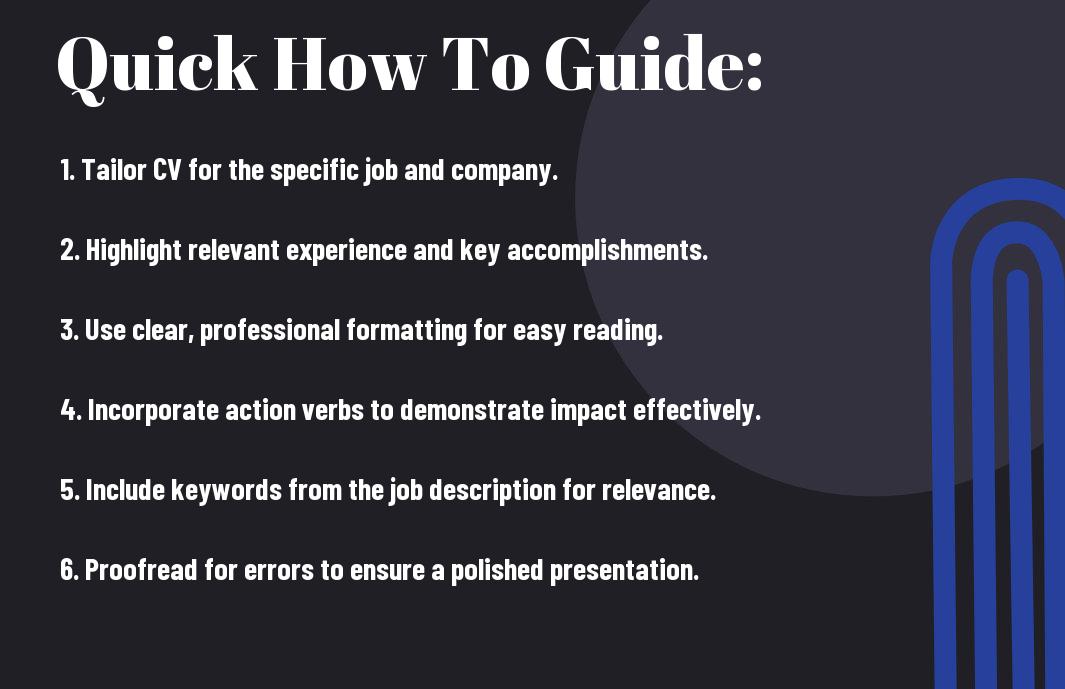
Tips for Highlighting Key Skills and Achievements
If you want your CV to grab the attention of potential employers, it’s crucial to highlight your key skills and achievements effectively. Focus on showcasing competencies that align with the job description and demonstrate your unique value. You can accomplish this through clear and concise bullet points that draw attention to your strengths. Consider the following tips:
- Identify the most relevant skills for the position.
- Use specific examples to illustrate your achievements.
- Prioritize your skills based on the job requirements.
- Tailor your CV for each application to fit the industry.
- Combine hard skills with soft skills for a well-rounded profile.
This approach will help you stand out and effectively convey what you can bring to the table. For more insights, check out Crafting an Impressive CV: Tips to Stand Out and Succeed.
Choosing the Right Format
Some formats lend themselves better to specific types of jobs and industries, so you need to choose wisely. For instance, a chronological format is effective if you have a solid work history, while a functional format might suit those with gaps in their employment or who are changing careers. Consider what would showcase your strengths and make your accomplishments shine.
Adapting your format to the job you are applying for can significantly influence perceptions of your qualifications. Make sure to maintain consistency in font styles and sizes for a professional appearance across your CV. Prioritize readability, as a clean layout enhances your chances to engage an employer’s interest.
Using Action Verbs and Quantifiable Results
Results matter, and using action verbs is a powerful way to present your achievements in a dynamic manner. Start each bullet point with strong action words like “achieved,” “developed,” or “led,” to convey your contributions effectively. Coupled with quantifiable results, this technique provides concrete evidence of your capabilities, leaving a lasting impression on the employer.
Another effective strategy is to couple action verbs with data that quantifies your success. Whether it’s “increased sales by 30%” or “managed a team of 10,” these specific accomplishments not only catch the eye but demonstrate your effectiveness and impact within previous roles. Tailoring these statements to reflect the goals of the position you seek adds even more weight to your application.
Factors to Consider When Writing Your CV
After you have decided to put pen to paper, it’s important to consider various factors that can make your CV stand out. You should tailor your CV to the job description, highlight relevant skills and experiences, and ensure your document is clear and concise. A well-structured CV allows potential employers to quickly grasp your qualifications. To help you with this process, focus on these elements:
- Customization for the job role
- Alignment of skills with employer needs
- Clear and concise language
- Use of quantifiable achievements
- Appropriate formatting and length
Perceiving these factors from an employer’s perspective enhances your ability to create a CV that invites their interest.
Importance of Keywords
Now, incorporating the right keywords in your CV is pivotal for passing through Applicant Tracking Systems (ATS) that many organizations use to filter applicants. By using keywords specific to the job description, you increase the chances of your CV being seen by human eyes. These keywords often relate to skills, qualifications, and industry-specific terminology that employers commonly look for. Be sure to analyze the job posting closely and adapt your CV accordingly.
Utilizing relevant keywords not only helps you get past the initial filtering system but also signals to employers that you understand the industry and possess the required competencies. This approach demonstrates your proactive nature and alignment with their expectations, two qualities that employers highly value.
The Role of Design and Layout
One key aspect of creating an impactful CV is its design and layout. A thoughtfully designed CV catches the eye and keeps the reader engaged. Use headings, bullet points, and ample white space to guide the reader through your experience and skills effortlessly. A cluttered or overly complex CV can detract from your message, while a clean, organized layout directs attention to your qualifications and achievements.
Design should complement content; balance aesthetics with professionalism to ensure your CV reflects your personal brand. Choosing the right font and appropriately sized text can enhance readability. It’s also important to be mindful of how colors and graphics might resonate with the culture of the organization you’re applying to. A well-designed CV can communicate your attention to detail and understanding of a professional environment, which can set you apart from other candidates.
How to Avoid Common CV Mistakes
Keep in mind that a well-crafted CV should showcase your skills and experiences effectively. Unfortunately, many candidates overlook certain details that can detract from their overall presentation. By being aware of common pitfalls, you can enhance your CV and make a stronger impression on potential employers.
Proofreading for Errors
Now, one of the quickest ways to undermine your credibility is by presenting a CV filled with typographical or grammatical errors. A simple misspelling can suggest a lack of attention to detail, which employers typically find concerning. After you finish writing, take the time to read through your document multiple times. Utilize tools like grammar checkers and even consider reading your CV out loud to catch mistakes that may not be immediately obvious on the page.
Maintaining Professional Tone
Now, it’s necessary to ensure that your CV maintains a professional tone throughout. The language you use should reflect your competence and suitability for the role you are applying for. Avoid slang, overly casual phrases, or jargon that may not be familiar to all readers. Instead, opt for clear, concise language that communicates your message effectively and professionally.
Professional tone not only captures your qualifications but also reveals your understanding of workplace etiquette. Using industry-specific language can reinforce your expertise, but make sure to balance it with clarity to accommodate all potential readers. This approach will ensure that your CV resonates well with hiring managers across various sectors and helps you stand out in a competitive job market.
Tips for Customizing Your CV for Different Industries
Not every job application requires the same approach to your CV. To truly stand out to potential employers, you should tailor your CV for the specific industry you’re targeting. This demonstrates your understanding of the sector and allows you to present your skills and experiences in the most compelling way. Consider the following tips:
- Research key skills and experiences valued in your desired industry.
- Highlight relevant achievements that align with industry standards.
- Use industry-specific language to resonate with potential employers.
- Adjust your formatting to match the industry (e.g., creative vs. corporate styles).
After refining your CV for the particular industry, you increase your chances of catching an employer’s interest and making a lasting impression.
Sector-Specific Skills to Highlight
Now it’s crucial to identify the sector-specific skills that are impactful in your chosen field. Different industries prioritize distinct qualities, whether it’s leadership in corporate settings or technical expertise in IT. By emphasizing these abilities, you draw the employer’s attention to what matters most for the role you’re applying for. Examine job descriptions closely to understand which skills are most frequently mentioned and tailor your experiences to reflect those competencies. This strategic alignment can significantly boost your chances of standing out among other candidates.
Adapting Language and Terminology
Highlighting the correct language and terminology not only reflects your familiarity with the industry but also aligns your CV with the expectations of employers. Adapting your language to suit the jargon commonly used in your target sector can make your CV more relatable and persuasive. Use keywords from job postings to mirror the language that employers value. This not only helps your CV pass through Applicant Tracking Systems but also connects you more closely with hiring managers who appreciate candidates that speak their language.
It’s advisable to keep an ear to the ground about trending language within the industry. This means not just looking at job postings but also engaging with industry publications and professional groups. Understanding the lexicon will enable you to present your qualifications using the same terms and phrases that potential employers resonate with, enhancing your CV’s overall impact and relevance.
How to Make a Lasting Impression with Your CV
Unlike many aspects of recruitment, your CV is your personal marketing tool and should serve as a comprehensive yet concise reflection of your professional capabilities. To catch an employer’s attention, it is important to present a document that not only highlights your skills but also resonates with the specific needs of the job role you are applying for. Personalizing your CV for each application shows that you’ve put thought into your submission, increasing your chances of making a strong impression. A clean design, free of clutter, paired with organized sections, will further make it easy for hiring managers to navigate through your qualifications, allowing them to see your potential contributions quickly and efficiently.
A well-crafted CV does more than detail your work history; it captures your professional essence. Including engaging language and quantifiable achievements can turn mundane bullet points into compelling stories, making the reader eager to learn more about you. Use active verbs and specific metrics to illustrate your achievements, thus turning your potential employer’s head toward your application. This strategic presentation not only has the power to evoke interest but also helps you stand out in a sea of applicants.
Crafting a Memorable Summary Statement
Summary statements are often the first thing that employers read, so you need to make this section count. Your summary should act as a succinct overview of your qualifications, highlighting your most relevant achievements and skills while aligning them with the position you are pursuing. Think of it as your elevator pitch—the more engaging and informative it is, the greater your chances of inspiring the reader to investigate deeper into your CV.
When writing your summary, focus on your unique selling points. Avoid generic phrases and instead tailor this section to reflect your personal brand. You should include specific expertise that the employer is likely to find appealing, thus providing clear reasons as to why you would be a great fit for the role. By doing so, you position yourself as a candidate who brings not just qualifications, but value to the table.
Utilizing Recommendations and Endorsements
Utilizing recommendations and endorsements adds significant weight to your CV, as they serve as social proof of your capabilities. Showcasing testimonials from previous employers or colleagues can substantiate your claims and offer insight into your character and work ethic. Including a section for endorsements can differentiate your CV, affirming your skills through the words of others, creating a narrative around your professional journey that resonates with potential employers.
Understanding the importance of robust recommendations should guide your approach when curating your CV. Aim to collect endorsements that align with your career objectives and highlight your best attributes. Whether from LinkedIn or in the form of written testimonials, these recommendations can provide context that numbers alone may not convey. Presenting such endorsements not only builds your credibility but also offers hiring managers someone else’s perspective on your impact and effectiveness, making your CV an invaluable asset in your job search.
Summing Up
With these considerations, you can create a well-crafted CV that becomes a powerful tool in evoking an employer’s interest. Your CV should not only highlight your skills and experiences but also tell your unique story, showcasing how these attributes align with the values and needs of the organization. Tailoring your CV to each specific job application is key, as it demonstrates your genuine interest in the position and reflects your understanding of the company’s objectives. By using clear formatting and language, you make it easier for potential employers to see the value you bring to their team.
Furthermore, incorporating quantifiable achievements and relevant keywords enhances your CV’s impact and visibility in applicant tracking systems. You should think of your CV as a marketing tool that sells your professional brand. In doing so, you not only capture an employer’s attention but also make a compelling case for why you are the right fit for the job. By presenting your accomplishments and potential plainly and persuasively, you increase your chances of making a positive impression that resonates throughout the hiring process.
FAQ
Q: What elements should be included in a well-crafted CV to capture an employer’s interest?
A: A successful CV should include a clear and professional layout, concise contact information, a compelling personal statement, relevant work experience, education details, skills tailored to the job description, and any additional qualifications or certifications. Each section should be well-organized to allow for easy reading. Use bullet points for clarity and consistency in formatting to create a polished appearance.
Q: How can personal branding in a CV make a difference in attracting an employer’s attention?
A: Personal branding sets you apart from other candidates by showcasing your unique qualities, professional ethos, and career goals. Within the CV, this can be accomplished through a strong introductory statement that aligns your skills with the employer’s needs, emphasizing what makes you a suitable candidate. Adding personal achievements or testimonials can also reinforce your brand and leave a lasting impression.
Q: Why is it crucial to tailor my CV for specific job applications?
A: Tailoring your CV allows you to highlight the most relevant experience and skills that match the requirements of the job you are applying for. This targeted approach demonstrates to the employer that you have taken the time to understand the position and the organization, showcasing your genuine interest. Customized CVs speak directly to the employer’s needs, increasing the likelihood of selection for an interview.
Q: What role does the use of keywords play in making a CV stand out?
A: Using industry-specific keywords and phrases can significantly enhance your CV, especially when employers use Applicant Tracking Systems (ATS) to screen submissions. By incorporating relevant terminology that matches the job description, you can improve the chances of your CV being noticed during initial scans. This not only engages the employer but also demonstrates your familiarity with the sector.
Q: How can the presentation and design of a CV influence an employer’s perception of a candidate?
A: The presentation and design of your CV play a vital role in forming a first impression. A visually appealing and well-organized document conveys professionalism and attention to detail. Using consistent fonts, appropriate colors, and concise layouts will show that you value quality and professionalism. A cluttered or poorly designed CV, on the other hand, might signal a lack of care or seriousness about the application.